usa

Spring Flowers in DC

P1140396


P1140404


It is Cherry Blossom Festival time in DC once again.  I went down to take a few photos with the masses.  I didn’t realize it was parade day but I still managed to fight the crowds and get a few good pictures.

In 1912 the Japanese government gave the USA over 2000 cherry blossom trees.  Between 1913 and 1920 they were planted all around the Tidal Basin in Washington DC.  Today there are 3,570 trees around the basin and in neighboring parks.

P1140403

Please do not pick the blossoms

P1140412 P1140408 P1140414 P1140415 P1140393 P1140400 P1140392 P1140401 P1140390 P1140389 P1140416

Food Friday: Blitz Torte


FoodLogo

IMG_1222


I ran out of time this week and didn’t manage my usual wonders in the kitchen.  But I did run across an interesting cookbook:

 The Victory Binding of the American Woman’s Cook Book

Wartime Edition

Edited  by Ruth Berolzheimer, 1944

There is a handwritten note in the inside that says:

War – 1942

Will He come back to marry me?

Marlene Anne

1944

I love this photo:  The Machine Beats Time As Well As Batter While You Supply The Brain That Makes The Cake.

IMG_1219 


Blitz Torte

½ cup shortening

½ cup sugar

1/8 tsp salt

4 egg yolks, beaten light

1 tsp vanilla

3 tbsp milk

1 cup sifted cake flour

1 tsp baking powder

4 egg whites

¾ cup sugar

½ cup sliced blanched almonds

1 tbsp sugar

½ tsp cinnamon

Cream shortening; beat in sugar and salt, then egg yolks, vanilla, milk and flour (sifted with baking powder).  Spread mixture in 2 round greased cake pans.  Beat egg whites until very light, add ¾ cup sugar gradually and spread on the un-baked mixture in both pans.  Sprinkle with almonds, 1 tbsp sugar and cinnamon and bake in a moderate oven (350 degrees F) about 30 minutes.  Let cool and put together with cream filling.  Makes 1 (9-inch) 2 layer cake.

Cream Filling:

1/3 cup sugar

3 tbsp cornstarch

¼ tsp salt

2 egg yolks

2 tbsps butter

2 cups milk, scalded

1 tsp vanilla

Combine sugar, cornstarch, salt and egg yolks; beat thoroughly.  Add butter and enough milk to make a smooth paste.  Add paste to remaining hot milk and cook over boiling water, stirring constantly until mixture is thickened.  Cool and add vanilla.  If desired add ½ cup chopped nut meats.


‘Tis the Season – Sweet Inspiration

very-inspiring-blogger-award


‘Tis the season.. Have you seen that snow falling across the pages of WordPress?  Thought I was imagining things at first.  Lovely soft falling snow.

It must be that giving season.  I have been given an award not once, not twice, but three times!  What fun!

The Very Inspiring Blogger Award was sent my way by  WIE SAGT MAN…?, A Hausfrau in Deutschland.  An informative blog about two Americans living in Germany.

The Petroleum Wife, TCK and trailing expat spouse, also sent this award my way.

I thank you both.  You inspire me as well.

For once, I am going to follow the rules (more or less).  Seven things about me:

1.  I once had a turtle named Tootsie

2.  I like to watch Doc Martin and work on my needlepoint

3.  I love art museums

4.  I think Roger Daltrey is cute even though he is way too old to go prancing around stage with his shirt off

5.  I want to go to Buenos Aires and learn to Tango and then see the end of the world in Ushuaia

6.  I am convinced chocolate and red wine will cure anything

7.  I love all you nutty bloggers


And the Nominees are:

Mumigrants  –  An honest look at being a mum and a migrant.

Expat Since Birth  –  A multicultural family living in the Netherlands

Mirth and Motivation  –  A TCK who believes in positive kismet/fate

American Tai Tai  –  In search of beauty in the mundane

Angelinem’s Blog  –  Traveler, photographer, nurse


Congratulations!


super-sweet-blogging-award21-copy


My other award comes from  Jumble,  An American woman living in China.  It is the The Super Sweet Blogging Award.  Not sure if I got it because I am so sweet or because of my Food Friday.  I’m sure it was both!  🙂  Thank you, Ms Jumble!!

This one comes with questions:

1) Cookie or cake?   Chocolate chip cookies, of course!

2) Chocolate or vanilla?  Is that a choice?  Chocolate all the way.

3) What is your favorite sweet treat?  Dark chocolate truffles

4) When do you crave sweet things the most?   The holidays!!

5) If you had a sweet nickname what would it be?   Dulcinea


And now, drum roll….

This one goes to Maggie at Fly Away Home Book, A New Jersey girl living in Norway.  She is very sweet and currently sitting under a ton of snow.

Happy Holidays everybody!!


Poppy Day


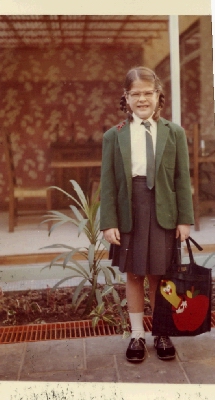
I went to a British grade school in Mexico City.  We wore a uniform.  It was a grey skirt, shorts or trousers for the boys, white sox, black shoes, a white shirt, a green tie (both girls and boys) and a green blazer with the crest of the school sewn on the upper left hand pocket. My brother used to get into trouble because his badge kept getting ripped and he would take it off.  That crest had to be on there.  I learned to tie my own tie at 7 years old.  Some kids wore clip-ons but most of us tied our own.

In November my first year, kids started showing up with red paper poppies pinned to the lapel of their blazers.  I had never heard of Poppy Day but I loved the color added to the otherwise mundane clothing.  I bought one and wore it even though I didn’t understand why. I looked forward to it every year. That splash of red.

When I was working at the British Embassy in Moscow, I saw people wearing poppies on their lapels and it took me right back to school in Mexico. I had forgotten all about those red paper poppies.

Recently I have been watching the BBC to give me a more worldly perspective on the news. And lately they are wearing poppies. I have poppies on the brain.

It was the 11th month, 11th day, 11th hour when hostilities ended.   It was the end of the First World War, the war to end all wars. Poppies bloomed all across the fields where the battles were fought and lives were lost. A sea of red.


In Flanders fields the poppies blow

Between the crosses, row on row,
That mark our place; and in the sky
The larks, still bravely singing, fly
Scarce heard amid the guns below.

We are the Dead. Short days ago
We lived, felt dawn, saw sunset glow,
Loved and were loved, and now we lie
In Flanders fields.

Take up our quarrel with the foe:
To you from failing hands we throw
The torch; be yours to hold it high.
If ye break faith with us who die
We shall not sleep, though poppies grow
In Flanders fields.

                        Lieutenant Coronel John McCrae, 1919

Also known as Remembrance Day, Armistice Day, Veteran’s Day, it is honored around the world in different ways.

In the USA poppies are assembled by disabled and needy veterans in Veteran Hospitals.   The poppies are given in exchange for contributions.  The contributions provide financial assistance in maintaining these veterans’ rehabilitation and service facilities as well as the Verterans’ of Foreign War National Home for orphans and widows of the nation’s veterans.  They aren’t as common here as they are in Britain but you can find them.  Wear your poppy proudly!

It wasnt easy, but I VOTED!


I voted but it wasn’t easy.  I left my house at 6:30 thinking I would get there early.  It took me 20 minutes to find a parking place.  As I walked to the polling station, a Middle Eastern man asked me in broken English,  “This way to the President?”  I answered, “Yes!  This way!”

I waited in line for about 15 minutes outside in the cold.  Behind me were a couple who spoke loud Italian the whole time we were in line.  Two people ahead of me was the exact same Indian guy who had been ahead of me four years ago.  I guess we were on the same schedule.  I could hear many different languages being spoken and all kinds of people were in line.  Black, White, Brown, old, thin, fat, young, disabled, happy, pensive.  Once I got inside the building, I thought to myself, this isn’t too bad.  The line went down to the end of the hallway and back.  I figured about half an hour.

When I reach the first turn, I saw another long hallway with people lined up all the way down and back.  When I reached the end of that hallway, there was another one.  I figured there were about 500 people in front of me and probably more behind me.  It took me two and a half hours to vote.

Nobody complained.  People were calm and quiet.  They joked about the line.  They greeted neighbors they new.  They smiled.  Some had their children with them.  One family brought their first time 18 year old voter with them.  People said things like, I can wait in line once every four years, no problem. It is worth it.

I hope my guy wins!  We will know soon enough.

Hurricanes and The Sound of Water

I have just finished reading the Sound of Water by Valerie Davies.

I enjoyed it very much and learned a lot!  It is full of literary references and historical anecdotes along with beautifully written images of life in a small New Zealand village.

The reason I mention this is, of course, Sandy.  Water.  It seems apropos.

It has rained for three days.  Wind and water.

Leading up to this major historical event, I stopped by the store thinking I should probably get some batteries for my flashlight, just in case.  By some miracle, I happened upon the last packet of “D” batteries in the store.  I later saw a news report on batteries, “D” batteries were nowhere to be found.  I had been lucky.

I wandered around the store and picked up a few more items, just in case.  Of course wine was a top priority but, on my way, I stopped by the bread aisle.  Interestingly enough, all the white bread was sold out.  Only whole wheat and “healthy” bread remained.  Made me laugh.  There was plenty of “my” bread left so I bought a loaf, just in case.

My son hauled the cooler out of the closet, just in case.  I made extra ice, just in case.

I charged up my iPhone backup battery, and filled up my Brita water jugs.  Just in case.

We hunkered down.

Schools, closed.  Federal Government, closed.  Public transportation, closed.  My office, closed (although expected to work from home – ahh, modern technology!).

We watched Obama return to the White House.  He was right there in the middle of it all.  We watched the weather channel, and CNN.  And just to break it up a bit, we watched and old Bond movie with Sean Connery.

The wind started up after dark and remained fierce for several hours.  We have some downed trees in the area and we are soggy.

But we never lost power.  We were lucky.   Our elected officials did what they were supposed to do, our public employees did what they were supposed to do, mostly people listened, and we were lucky.

And in-between news reports, Valerie Davies got me through.

Travels through History

Jamestown:  The first permanent Colony of the English People.  The Birthplace of Virginia and the United States of America,  1607

I spent the weekend visiting my cousins in Williamsburg.  One afternoon was devoted to Colonial National Historical Park: Jamestown.  A large African American park ranger named Jerome showed us around.  He told us the three most important facts about Jamestown were:  it was the first permanent settlement of the English in the New World (1607); the first representative assembly talks took place in 1619 where 22 elected burgesses met in the church; and the first Africans arrived in 1619.   Therefore concluding that this very spot was the birthplace of the great country – The United States of America.

I had a small chuckle over this one since, of course, part of this great history was that the Native population was virtually killed off pretty quickly and by 1690 there were 9,300 enslaved Africans among a white population of 53,000.  But why dwell on the negative?

These crazy Englishmen set up camp on an island with a swamp on one side and a salty river on the other.  No fresh water.  The swamp provided lovely benefits such as malaria and typhoid.  By 1609 there were about 300 men living on this island, fighting off skirmishes from the Powhatan tribes.  That winter was particularly rough and at the end of it only 60 survived.  But they didn’t give up.  Ninety unmarried women arrive in 1619 to boost morale.


We also learned that the 12 year old Pocahontas did not have an affair with the 27 year old John Smith (despite what Disney says).  But they did probably know each other.  The settlers eventually figured it all out and started growing tobacco.  They were soon rich farmers with a huge market and very few expenses.  John Rolfe cultivated a strain of tobacco that was pleasing to the English.  He used seed he had obtained from Trinidad since the local variety was deemed too harsh.  John Rolfe was the man who married Pocahontas.


Pocahontas as Rebecca, married English woman


Up until 1994, it was believed that the site had been reclaimed by the river and was lost under water.  An archeologist by the name of William Kelso did not believe it.  According to historical documents, the church was built inside the fort.  The church tower remained on the island in clear site.  In 1994, Mr. Kelso took a shovel to the site and soon found artifacts, bones, and evidence of the exact area where the walls of the fort were built.  Today you can see them reconstructed in the very holes the men dug 400 years ago.  William Kelso became an Honorary Commander of the Order of the British Empire at a ceremony at the British Embassy in Washington, DC, in July 2012.


The Harvest

In 1975, I volunteered for an organization called Migrants in Action.  It was an advocacy group for the Mexican migrant workers who worked in the fields from Texas to Minnesota and all across the USA.  This got me interested in learning more about these migrant workers.  I was in college at the time and decided to apply for an independent study to write a research paper on migrant workers in the USA.  It was approved and I spent six weeks doing research and writing the paper.

Part of my research took me to the LBJ Library in Austin, Texas.  I don’t remember the details, there was a lot of legal jargon in my paper but it boiled down to:  Things were not Good for the Mexican Migrant Worker.  Here is a timeline:

  • 1920:  The Bracero Program is born. This was a contract that allowed for workers to bring their families with them, stated the pay rate, work schedule, where they would work and their legal status.  Of course this contract was written in English.
  • 1924:  The US Border Patrol was created and the “Illegal Alien” is born
  • 1942:  World War II creates job vacancies.  The Bracero Treaty was signed and this opened the door again to Mexican laborers. Between 1942 and 1964 four million Mexican farm workers came to the USA. Again the contracts were written in English and many braceros would sign them without knowing what their rights were or were not.  At the end of their contract they had to return to Mexico. As World War II ended, the jobs were taken over by returning veterans or workers displaced from wartime industries.  The program ended in 1964.
  • 1966:  Cesar Chavez leads a 250-mile march to Sacramento, California, to bring attention to the mistreatment of farm workers.
  • 1975: The California Labor Relations Act was passed; it was the first law that protected the rights of organizations of farm workers.

Today many of migrant workers are second or third generation families who have their US citizenship.  It is also possible to enter the country legally through the Guest Worker program.  Sometimes people will stay after their contract ends hoping for additional work and a better life.  In this way they open themselves up to all kinds of abuse and injustice because technically they do not exist. But even people with citizenship are living in poverty under horrible conditions.

There is a new documentary film called The Harvest/ La Cosecha which follows three children in a migrant worker family.  There are 400,000 children in the USA who work long hours seven days a week picking the food that ends up on your table.  The film in and of itself is an advocacy for this group of undervalued and mostly “invisible” people.

The Chair


My mother loves to talk about her flamboyant Aunt Lou who apparently was a real character and stood out in the small town they lived in in southern Iowa.  One of Aunt Lou’s chairs sits in my parents’ living room and will eventually sit in my living room if I can ever figure out how to get it here.  My mother says that when she got it it was painted black and was covered in red velvet.  My father spent hours getting the paint off and it has been re-covered several times over the years.  It is a handsome chair.  My brothers laugh at me because I like it.

Aunt Lou’s obit:

“Louise Campbell, daughter of James and Nancy Campbell, was born in Guernsey county, Ohio.  When a young girl she moved to Monmouth, Illinois, where she made her home.

She had three sisters and one brother, all of whom preceded her in death.  Her brother, J Milton Campbell, visited her here several times, and was known by many Mount Ayr people.  His son Boyd, Mrs Liggett’s nephew, was also known here.

In 1891 she was married to J Hall Liggett and came to Mount Ayr, Iowa, to assume the duties of mother to his three little girls.   These girls grew up under her care.  Mary, Mrs Wesley Peters, lives now in Denver, Colorado.  The other two, Josephine and Pearl, preceded her in death.  Her husband, Hall Liggett, died in 1926.

She is also survived by three nieces, Mrs Callie Underwood, of Peoria, Illinois, and Rose and Pearl Campbell, of Southern California.

Mrs Liggett was always of a happy disposition, being kind and thoughtful of others, and had many friends.  She was known to many as “Aunt Lou.”

She has always been a Christian, becoming a member of the Presbyterian charge early in life, and later transferring her membership to the United Presbyterian church.

She was 83 years of age.”

My great aunt Bert bought this chair in the 50’s.  After she died my aunt Jean had it in her house for many years.  Then she moved and nobody wanted the chair so I took it.  It is a Kroehler chair made in Chicago.  It is now considered “mid-century modern”.

As far as I’m concerned all my aunts had good taste in chairs.